

The publishing landscape has undergone a seismic shift. Where newsstand sales once determined a magazine’s success, digital subscriptions now drive the industry forward. Consider this: The New York Times generates more revenue from digital subscriptions than print, a trend that’s been accelerating since 2020 and shows no signs of slowing.
For publishers navigating this transformation, the choice of digital magazine platform isn’t merely a technical decision. It’s a strategic imperative that determines everything from reader engagement to revenue potential. The right platform transforms your print PDFs into immersive, mobile-optimized experiences that readers actually want to consume. The wrong one? It leaves subscribers pinching and zooming through clunky interfaces, wondering why they’re paying for a digital edition at all.
Today’s leading digital magazine platforms do far more than simply display your content online. They reflow complex layouts into elegant, single-column reading experiences. They deliver secure, password-free access that eliminates friction for your subscribers. They provide rich analytics that reveal exactly how readers engage with your content. And perhaps most importantly, they help you monetize your digital editions through subscriptions, back issue sales, and seamless integration with platforms like Apple News+.
Whether you’re a national publisher with millions of readers or a regional magazine building your digital presence, this guide will help you identify the platform that aligns with your publishing goals, technical capabilities, and growth ambitions.
Let’s explore the 20 best digital magazine platforms transforming how publishers reach their audiences.
What is a digital magazine platform?
A digital magazine platform is specialized software that enables publishers to create, distribute, and monetize digital editions. Unlike basic PDF viewers that simply embed print layouts—forcing readers to pinch and zoom—true platforms reflow content into mobile-optimized, single-column formats that work seamlessly across all devices.
The best platforms go beyond reformatting. They provide secure, password-free delivery, analytics dashboards for tracking engagement, monetization tools including subscriptions and paywalls, and distribution capabilities extending to Apple News+ and native apps. In essence, they transform static print files into dynamic digital experiences while giving publishers the infrastructure to build sustainable digital revenue streams.
Key criteria for choosing a digital magazine platform
When evaluating digital magazine platforms, publishers should prioritize features that directly impact both reader satisfaction and business outcomes. Here are the essential criteria to guide your decision:
- Mobile optimization & responsive design – Your content must look flawless whether readers access it on a desktop, tablet, or smartphone. Single-column layouts that automatically adapt to screen size aren’t just nice to have—they’re the baseline expectation for modern digital publishing.
- Customization & branding options – The platform should preserve your magazine’s visual identity. Look for solutions that honor your fonts, color palettes, and design aesthetic rather than forcing your content into generic templates.
- Audio articles for convenience and accessibility – AI-powered text-to-speech transforms written content into listenable formats, allowing readers to consume your magazine while commuting, cooking, or multitasking. It’s also essential for meeting accessibility standards.
- Distribution capabilities – Seamless delivery matters. The best platforms handle email distribution, native app maintenance, and Apple News+ integration so you can reach subscribers wherever they prefer to read.
- Analytics & reporting – You need to know which articles resonate, how long readers engage, and where they drop off. Robust analytics inform editorial decisions and help optimize your digital strategy.
- Monetization features – Whether you’re selling individual issues, managing subscriptions, or running display ads, your platform should support diverse revenue models without requiring separate systems.
- Back issue archive management – Giving subscribers access to your complete catalog adds value to subscriptions and can be a powerful retention tool.
- Customer support & services – Technical challenges are inevitable. Premium platforms offer hands-on support or even done-for-you production services that handle the entire conversion process.
Full-service digital magazine platforms
Let’s take a look at the best options for full-service digital publishing.
1. eMagazines
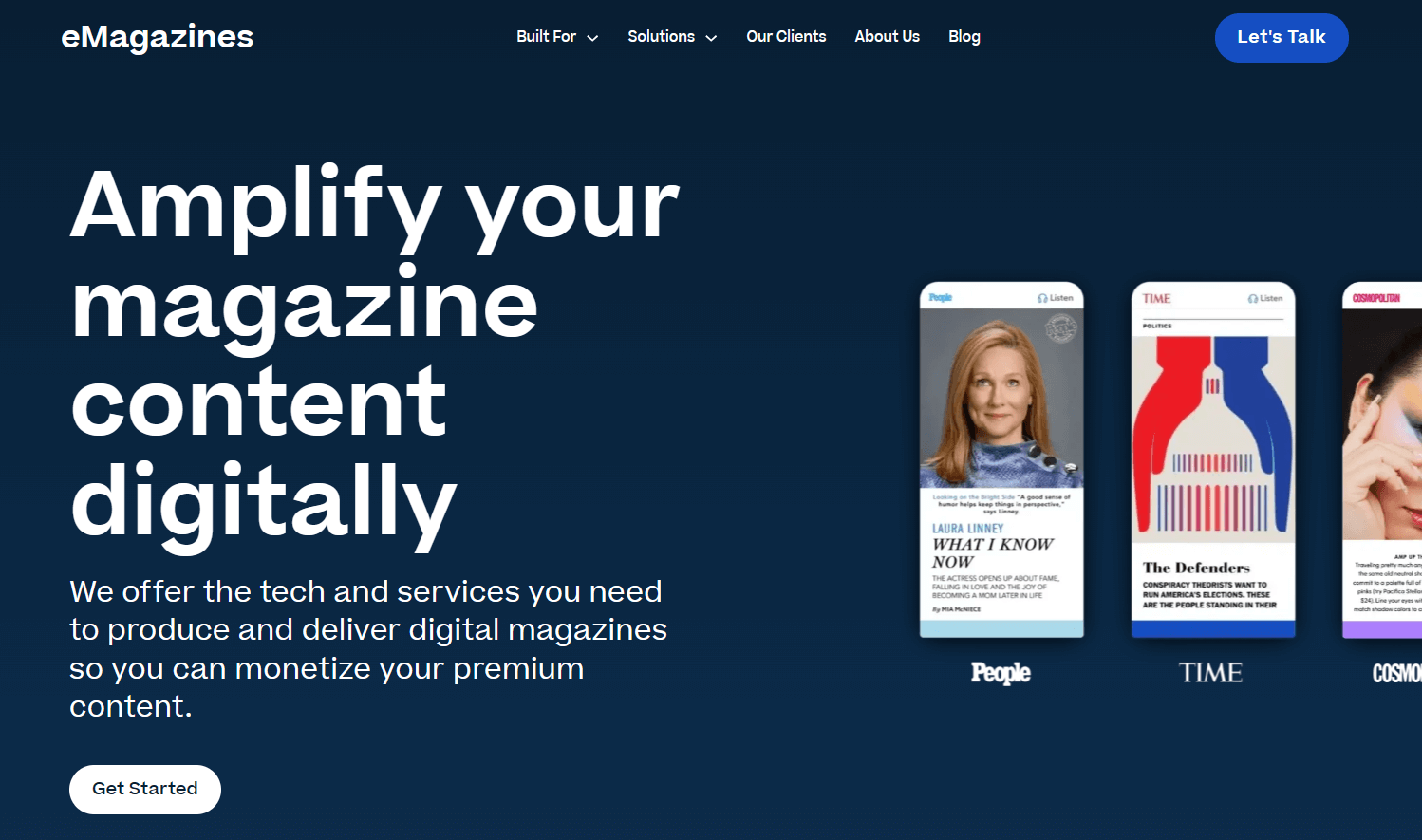
eMagazines powers the digital editions of some of the world’s most prestigious magazines, including People, TIME, Cosmopolitan, and Rolling Stone. Unlike basic PDF converters, eMagazines completely reflows your content into mobile-optimized, single-column reading experiences that look stunning on any device. The platform combines sophisticated software with white-glove production services, handling everything from PDF conversion to subscriber delivery and Apple News+ distribution, so publishers can focus on creating great content rather than managing technical infrastructure.
Key features:
- Mobile-optimized magazine reader with single-column, responsive design
- Password-free and download-free digital magazine delivery via secure smart links
- High-quality AI-generated article audio automatically created for every article
- Full production services including PDF conversion, styling, and quality assurance
- Subscriber back issue archive access with secure content protection
- Native iOS and Android app building and maintenance
- Apple News+ production, delivery, and ongoing support
- Custom subscription order pages that integrate with existing e-commerce platforms
- Comprehensive analytics and reporting through Google Analytics integration
- End-user customer support to reduce publisher workload
Pricing:
eMagazines offers custom pricing tailored to your publication’s size and needs, with solutions for national publishers, regional magazines, and niche titles. Plans include both self-service software options and fully managed services where the eMagazines team handles production, delivery, distribution, and subscriber support end-to-end.
2. MagLoft
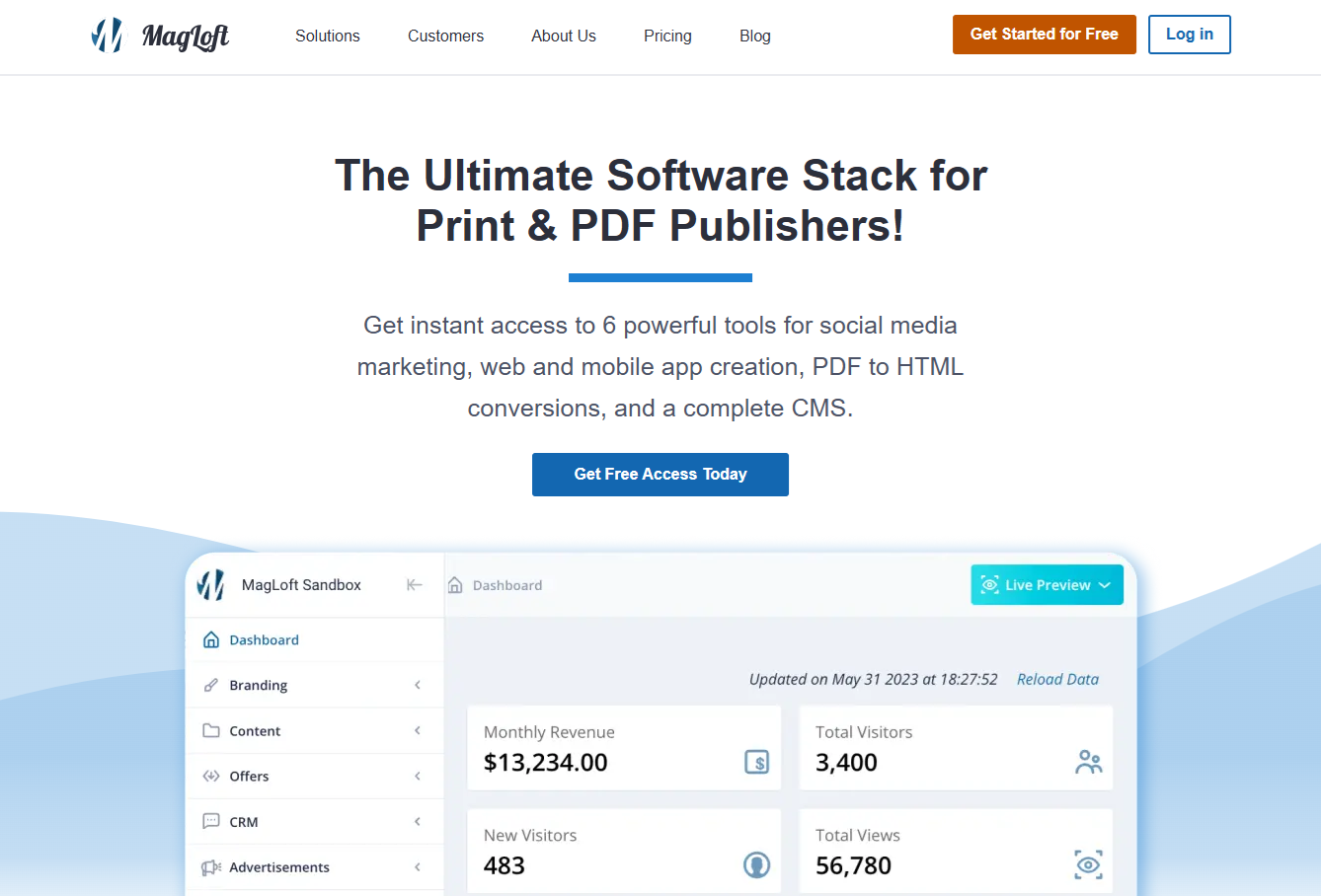
MagLoft offers a comprehensive six-tool suite designed specifically for print and PDF publishers transitioning to digital. At its core is FlexPDF, an AI-powered conversion engine that transforms static PDFs into clean, responsive HTML content optimized for mobile devices and search engines. Beyond conversion, MagLoft provides everything from social media automation across eight platforms to progressive web app creation and Apple News distribution. The platform is particularly strong for publishers who want an all-in-one solution that handles both content creation and multi-channel distribution.
Key Features:
- AI-powered PDF-to-HTML conversion with FlexPDF for mobile-responsive content
- TypeLoft visual drag-and-drop editor for interactive publishing with multimedia integration
- AppBuildr for creating branded iOS and Android apps without coding
- WebBuildr for building progressive web apps optimized for speed and SEO
- AutoSocial for automated social media scheduling across eight platforms
- AutoNews for Apple News content distribution (launching Q1 2026)
- Tiered subscription options with article-level and issue-level sales
Pricing:
MagLoft offers three tiers: the Starter plan at $199/month includes a Progressive Web App and single-level subscriptions; the Professional plan at $499/month adds iOS and Android apps, AI social publishing, and multi-user access; and the Tech Studio plan provides fully customized solutions with bespoke integrations for large organizations.
3. Joomag

Trusted by over 5,000 customers including Costco, HP, and FC Barcelona, this content experience platform combines digital publishing with advanced marketing automation. Joomag transforms static PDFs into interactive, mobile-optimized publications while also serving as a sophisticated tool for account-based marketing and demand generation. Its AI-powered content automation enables non-creative teams to produce personalized, on-brand materials at scale. The platform particularly excels at capturing reader data and providing granular analytics that reveal audience behavior and content performance, making it ideal for publishers who want to turn content into a revenue-generating asset.
Key Features:
- AI-powered content creation with 300+ professional templates
- Complete email marketing suite with CRM integration (Salesforce, HubSpot)
- Interactive elements including forms, surveys, chatbots, and dynamic charts
- Multi-channel distribution including content hubs, website embeds, and native apps
- Advanced reader authentication with gating options and access controls
- In-depth analytics tracking individual reading journeys and audience segmentation
- InDesign plugin for seamless workflow integration
Pricing:
Joomag offers three tiers with custom pricing: Lite/Scale for businesses elevating content strategy, Business for established publishers focused on security and integrations, and Enterprise for organizations requiring content automation, offline reading, and custom iOS/Android apps. Contact sales for specific pricing.
4. Issuu
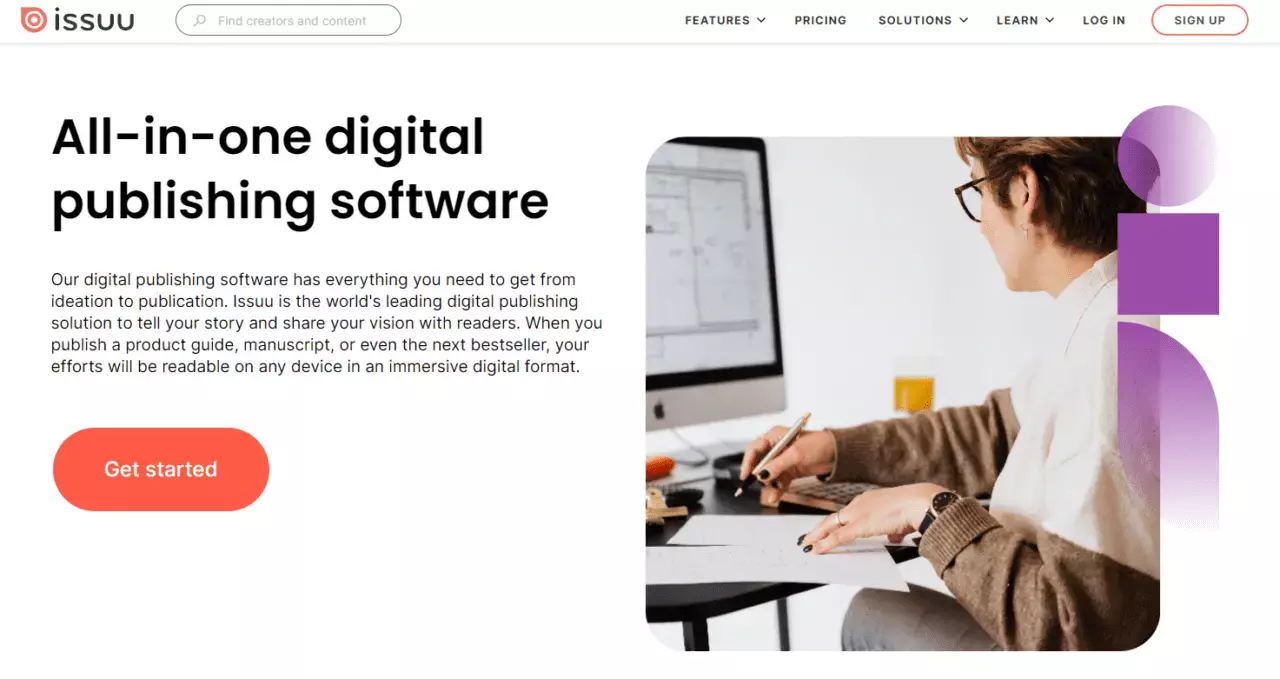
Issuu simplifies digital publishing for small to mid-sized publishers and content marketers by converting PDFs and other file types into interactive flipbooks, articles, social posts, and GIFs. With over 30 million publications launched and 100 million monthly visitors to its platform, Issuu provides a straightforward path to digital distribution. The platform excels at content repurposing, allowing publishers to create multiple content formats from a single upload. While it lacks the advanced mobile optimization of enterprise solutions, Issuu’s ease of use and multi-format output make it popular for businesses focused on broad content distribution.
Key Features:
- One-click conversion of PDFs into flipbooks, articles, social posts, and GIFs
- Fullscreen sharing with customizable branding and background colors
- Website embedding with advanced options and auto-flip functionality
- Commission-free digital sales for monetizing flipbooks and subscriptions
- Lead generation forms and in-depth statistics tracking impressions and read time
- Bulk upload capabilities and direct integration with Adobe InDesign and Canva
- Private publishing options for up to unlimited flipbooks depending on plan
Pricing:
Issuu offers four tiers: a limited free Basic plan; Starter at $21/month with 500 pages per upload; Unlimited at $188/month with no limits, advanced customization, and digital sales; and Teams starting at $417/month for collaborative workspaces with multiple users and administrative controls.
5. Foleon
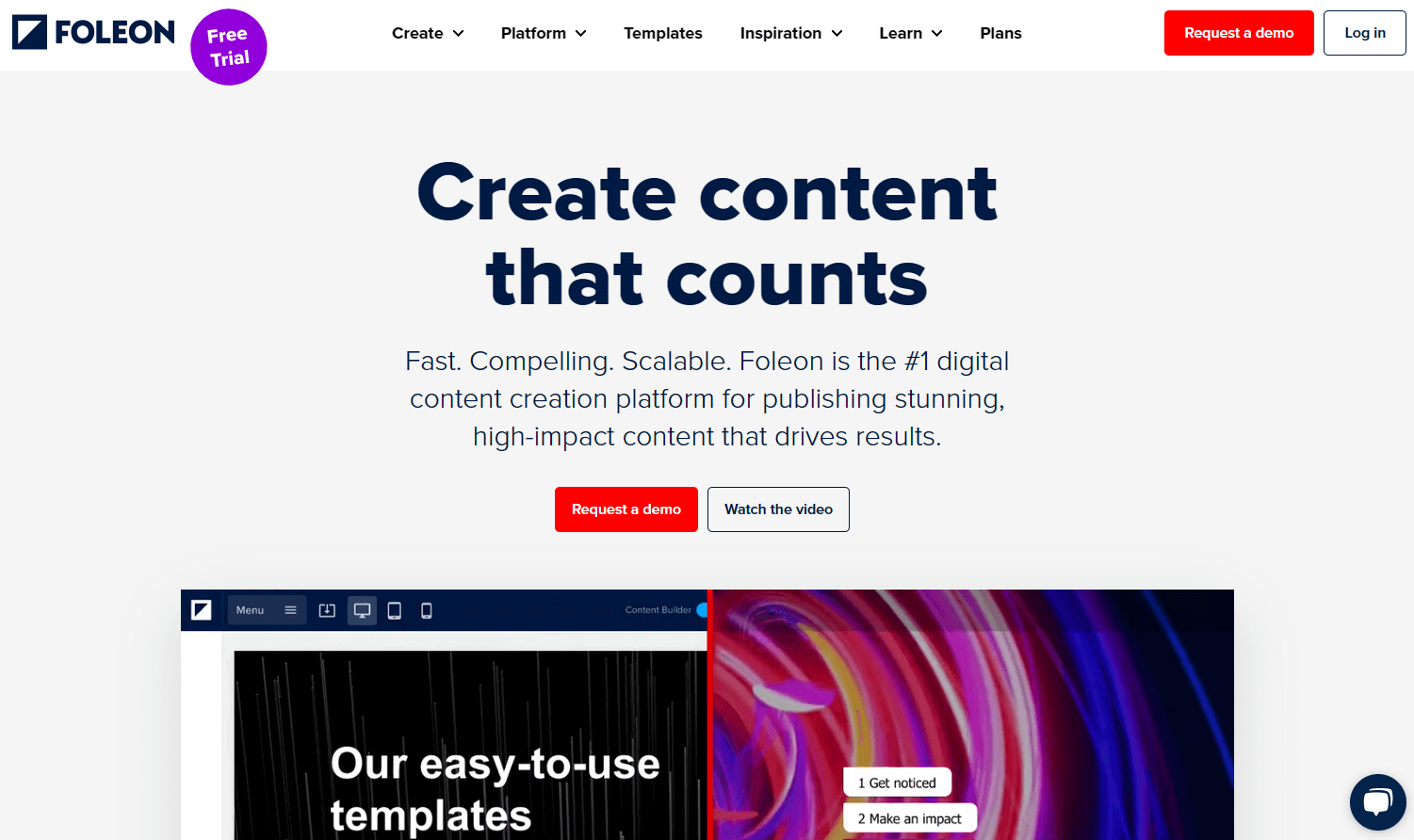
Built specifically for enterprise organizations and corporate marketing teams, this platform transforms internal publications and marketing collateral into interactive digital experiences. Foleon emphasizes governance and brand compliance, making it ideal for large companies that need multiple departments to create content while maintaining strict brand standards. Its drag-and-drop editor requires no design skills, while AI assistance handles everything from meta descriptions to tone adjustments. Unlike traditional magazine platforms, Foleon integrates deeply with marketing automation tools and CRMs, positioning digital publications as part of a broader content marketing strategy rather than standalone products.
Key Features:
- Intuitive drag-and-drop Content Builder designed for non-designers
- Brand Kit system with locked settings to ensure brand compliance across teams
- Global Content Modules that update automatically across all publications
- AI-powered localization supporting 40+ languages
- Dedicated workspaces for departmental collaboration with role-based permissions
- Native integrations with marketing platforms and SEO optimization tools
- Advanced personalization capabilities for tailoring content at scale
Pricing:
Foleon offers four enterprise-focused tiers with custom pricing: Grow for teams exploring interactive content, Scale for ramping up production with unlimited docs, Team for high-volume multi-departmental publishing, and Enterprise with unlimited global modules, locked settings, and priority support. Contact sales for quotes.
Magazine creation & flipbook platforms
These platforms specialize in converting PDFs into interactive flipbooks with page-turning effects, making them ideal for publishers who want to maintain a print-like reading experience in digital format.
6. Flipsnack
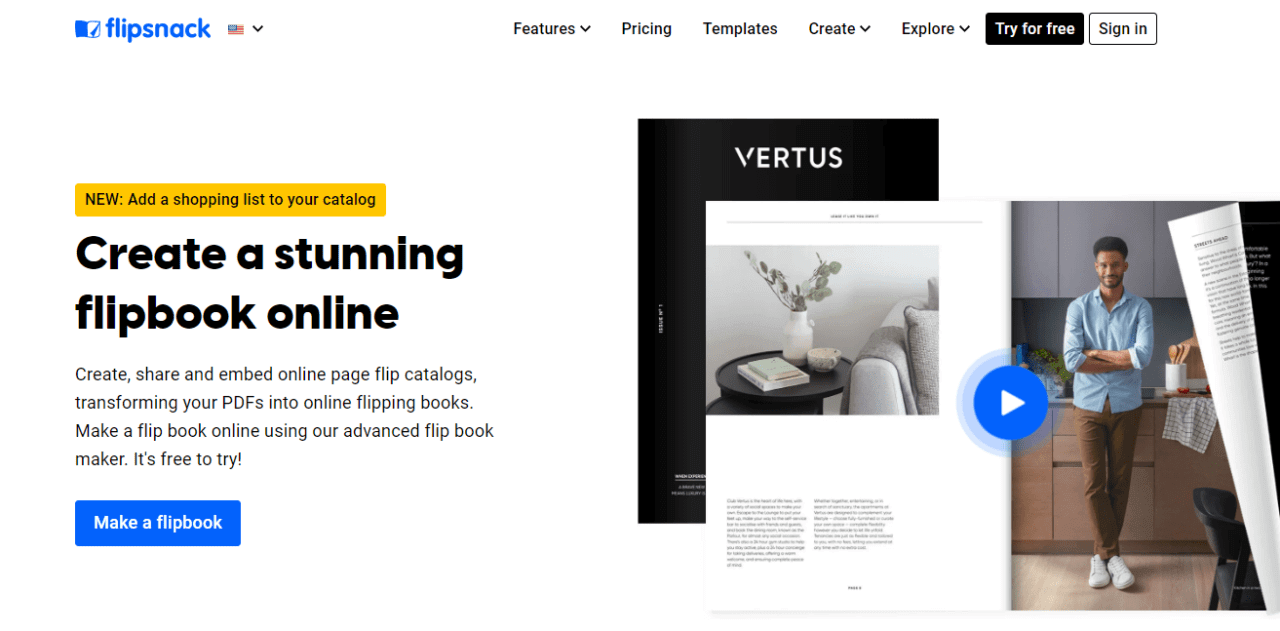
Active since 2011, Flipsnack has helped millions create interactive flipbooks with comprehensive design and distribution tools. The platform combines PDF conversion with an integrated Design Studio, allowing publishers to either upload existing files or build publications from scratch using templates. Flipsnack stands out for its flatplan editor, which streamlines magazine pagination and layout planning, and its robust privacy controls including password protection and private email sharing. The platform works particularly well for product catalogs and corporate magazines where interactive elements like product tags, videos, and lead forms enhance engagement.
Key Features:
- PDF-to-flipbook conversion with realistic 3D page-turning animation
- Built-in Design Studio with templates, stock media library, and drag-and-drop editor
- Flatplan editor for magazine layout and pagination planning
- Interactive elements including videos, product tags, slideshows, and lead forms
- Custom branding with logos, colors, custom domains, and HTML5 downloads
- Advanced privacy settings with password protection and SSO viewer access
- Page-level statistics, Google Analytics integration, and AI-powered insights
Pricing:
Flipsnack offers three main tiers billed annually: Starter at $16/month for 5 flipbooks with basic sharing; Professional at $38/month for 50 flipbooks with advanced interactivity and analytics; and Business at $85/month for 100 flipbooks with full branding and private sharing. Team and Enterprise plans available with custom pricing.
7. FlipHTML5
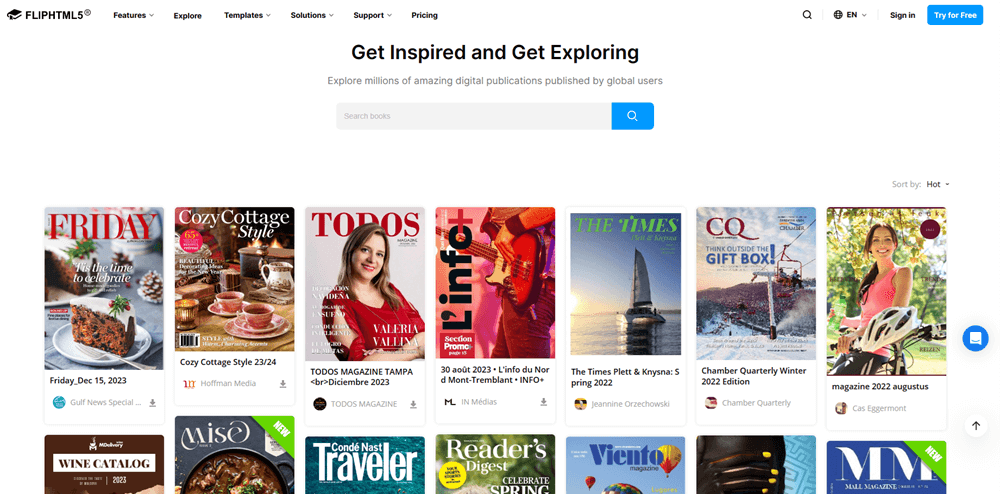
FlipHTML5 specializes in high-volume PDF conversion with batch processing capabilities that allow publishers to transform multiple files simultaneously into interactive flipbooks. The platform includes AI integration for text enhancement, image generation, and chatbot functionality within publications, setting it apart from basic conversion tools.
Key Features:
- Batch conversion to transform multiple PDFs into flipbooks simultaneously
- AI assistant for text polishing, translation, and generating images from text descriptions
- Multiple output formats including HTML, EXE, Mac App, and self-hosting options
- Product catalog generator with automatic CSV imports for e-commerce
- Google AdSense integration and digital sales functionality for monetization
- Realistic bookcase feature for displaying publication collections
- Multi-format file support including PDF, PPT, Word, and images
Pricing:
FlipHTML5 offers four tiers billed annually: Free with 5 flipbooks daily; Pro at $12.40/month with unlimited flipbooks and branding; Platinum at $24.90/month adding 3 accounts and 50,000 AI points monthly; and Enterprise at $83.30/month with 10 accounts, 150,000 AI points, and API access.
8. Yumpu

Founded in Switzerland, Yumpu distinguishes itself through aggressive SEO optimization that converts PDFs into search-engine-friendly HTML flipbooks. The platform automatically generates valuable backlinks and ensures Google indexing, making it particularly attractive for publishers who prioritize organic traffic and search visibility. Yumpu’s WEBKiosk feature allows publishers to create branded online newsstands that can display up to 100 magazines under a custom subdomain. While the reading experience is more basic than premium platforms, Yumpu’s focus on discoverability makes it a strategic choice for content marketers seeking broader reach.
Key Features:
- HTML conversion for superior search engine indexing and organic traffic
- Automatic SEO backlinks to improve search rankings and online presence
- WEBKiosk for creating branded online magazine collections with custom subdomains
- Drag-and-drop editor for customizing kiosk layout and corporate branding
- Multimedia element integration including videos, audio, and interactive content
- Social media sharing and QR code generation for multi-channel distribution
- API access for automated publishing workflows
Pricing:
Yumpu offers five tiers: Free with 3 uploads and basic features; adFREE at €14.95/month (billed annually at €179.40) with unlimited uploads and SEO backlinks; WEBKiosk at €69/month for branded online newsstands; APPKiosk at €178/month for custom iOS or Android apps; and PROKiosk at €277/month with in-app purchases and subscriber management.
9. BlueToad
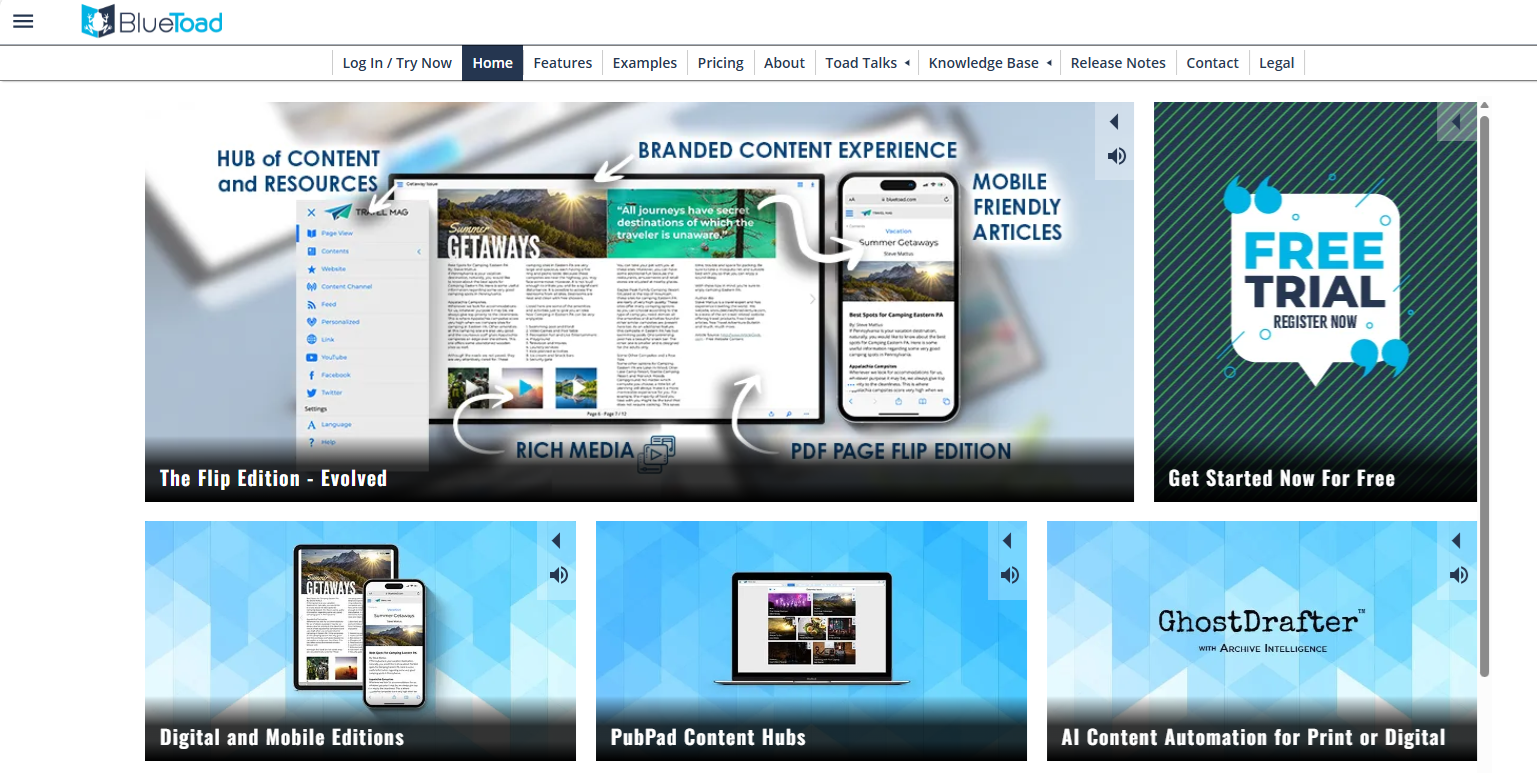
Publishing 130 million pages monthly since 2007, BlueToad provides full-service digital publishing with minimal publisher input required. Unlike PDF-dependent platforms, publishers can drag and drop raw content—images, videos, and text—directly into BlueToad’s editor, which then automatically generates mobile-responsive editions optimized for all devices.
Key Features:
- Content-first approach requiring no pre-formatted PDFs for publication creation
- Automatic mobile-responsive conversion for seamless reading on any device
- ADA and WCAG compliance ensuring accessibility for readers with disabilities
- Integration with third-party analytics and marketing automation tools
- Paywalls, subscriptions, and digital ad manager integration for monetization
- Consistent branding across all content and social media channels
- Phone, chat, and email support plus comprehensive video tutorials
Pricing:
BlueToad offers three tiers billed monthly or annually: Starter at $47/month for up to 75 pages and 2 publications; Pro at $199/month with unlimited publications, InstantAudio narration, and AI content tools; and Enterprise at $479/month adding multi-account management, API access, and custom training. Assisted service packages available for additional fees.
10. PressPad
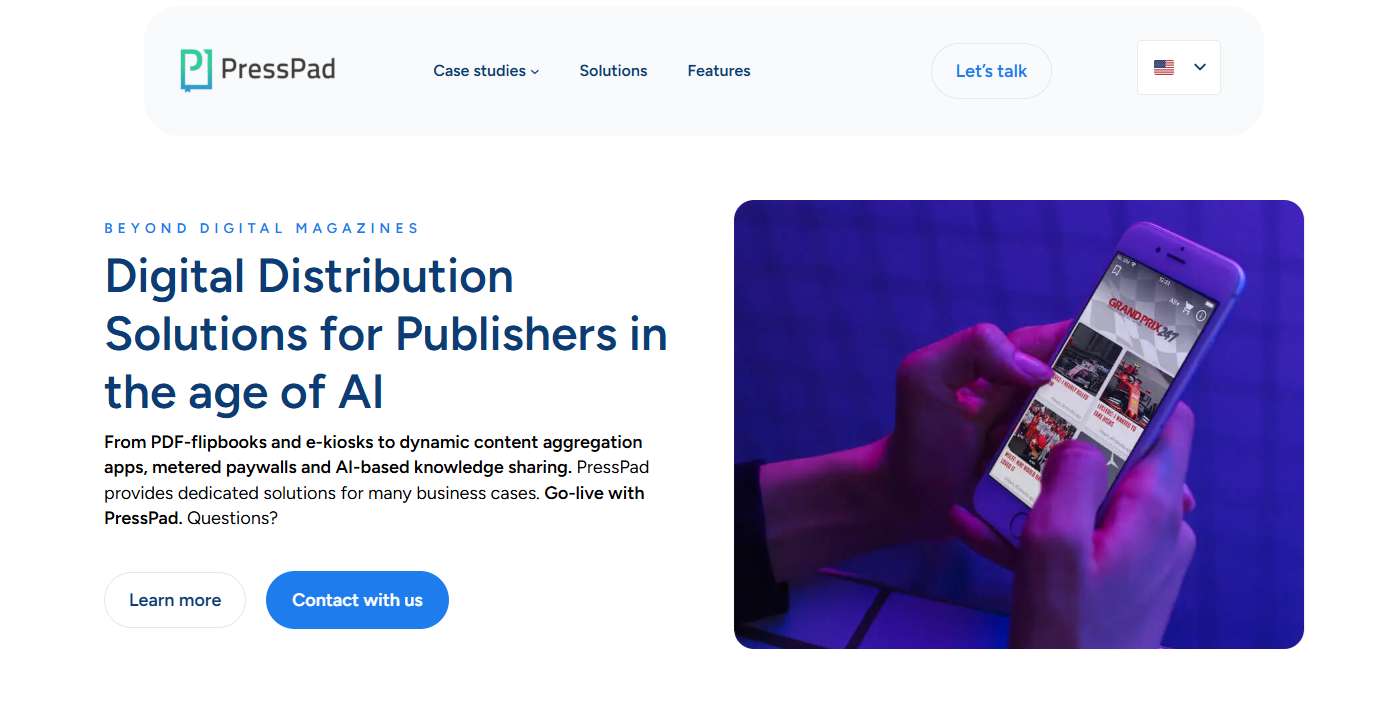
Operating since 2011 with over 1,000 custom apps built, PressPad offers publishers complete control over their digital distribution lifecycle. The platform specializes in PDF-based magazine apps and branded e-kiosks, handling everything from initial setup through ongoing App Store and Google Play management. PressPad stands out for its white-label approach and integration services, seamlessly connecting with existing publishing systems while providing hands-on support. With expertise spanning magazine apps, dynamic content aggregation, and AI-based knowledge sharing, PressPad serves as both technology provider and strategic consultant for publishers navigating digital transformation.
Key Features:
- Custom iOS and Android magazine apps with full App Store management
- Branded e-kiosk solutions with intuitive digital newsstand browsing
- Multiple monetization options including subscriptions, micro-payments, and donations
- Integration services connecting with existing CMS and user management systems
- User migration support for smooth subscriber onboarding and data transfers
- Push notification campaigns for reader engagement and content promotion
- White-label solutions maintaining complete brand identity throughout
Pricing:
PressPad offers custom pricing based on your publication’s specific needs and scope. Contact their sales team for a tailored quote that reflects your requirements for mobile apps, e-kiosk solutions, integration services, and ongoing support.
Specialized & niche solutions
These platforms target specific publishing verticals or unique use cases, offering specialized features tailored to particular content types or industry needs.
11. Twipe
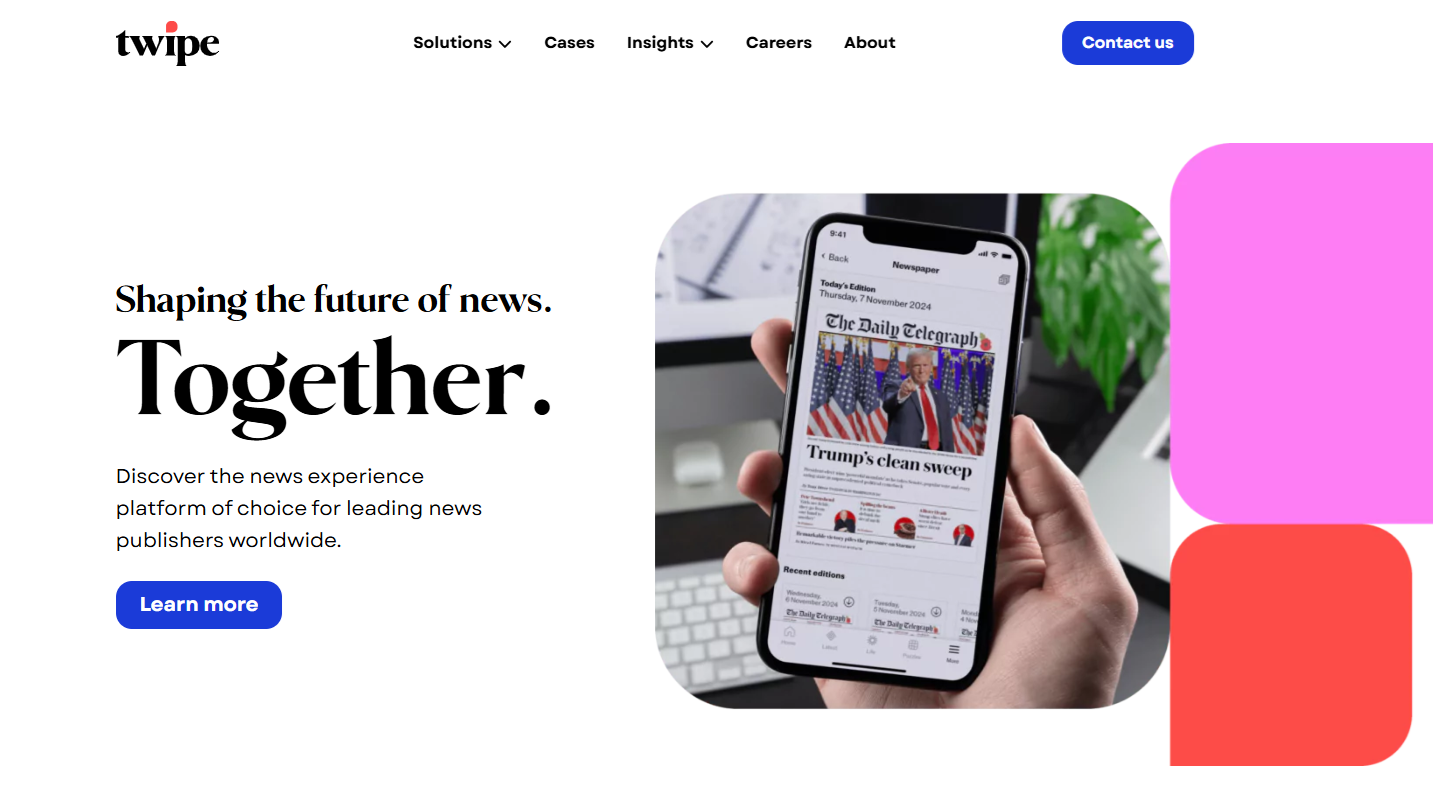
A two-time Google Digital News Initiative award winner specializing exclusively in newspapers and news magazines. Twipe’s AI-powered platform processes 2 million edition opens daily, with readers spending an average of 22 minutes per session—significantly above industry standards thanks to its intelligent personalization engine.
Key Features:
- JAMES AI assistant delivering personalized reading recommendations based on individual preferences
- Dual publishing options: traditional ePaper replicas and modern mobile-optimized editions
- Advanced analytics platform with real-time performance monitoring and engagement tracking
- Personalized push notifications and newsletters that have reduced churn by up to 49%
- SDK integration enabling seamless ePaper distribution across all platforms
- Interactive article lightboxes for enhanced storytelling within digital editions
- Trusted by leading newspapers including The Times and Le Monde
Pricing:
Twipe does not publish pricing online. Contact their sales team for custom quotes tailored to your newspaper or news magazine’s circulation size, feature requirements, and distribution channels.
12. Readz
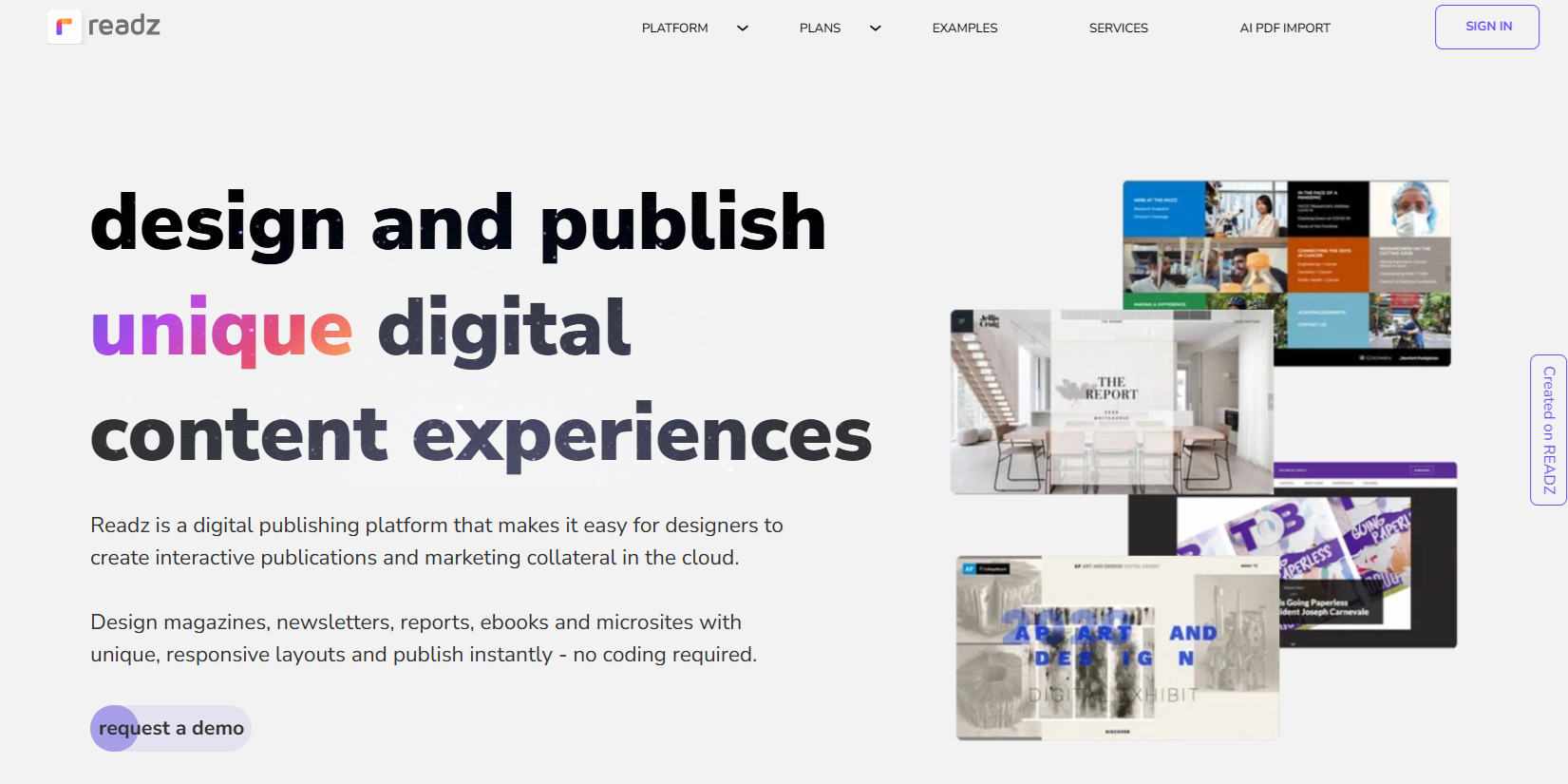
Readz offers a unique dual-platform approach serving different publisher needs: Design Studio for creating fully custom, responsive publications from scratch, and Flipbook Publisher for converting existing PDFs into interactive digital editions. This flexibility makes Readz particularly valuable for organizations that produce both designed content and print replicas. The platform emphasizes creative freedom with no-code tools that allow designers to break away from restrictive templates and frameworks. Readz’s freeform canvas enables pixel-perfect layouts that automatically adapt to any screen size, positioning it between basic flipbook converters and enterprise publishing platforms.
Key Features:
- Dual publishing modes: Design Studio for custom layouts and Flipbook Publisher for PDF conversion
- Freeform canvas with unlimited creative control and no coding required
- Pre-built blocks and templates library for faster content creation
- Adobe InDesign plugin for seamless import of existing page designs
- Marketing automation integrations with HubSpot, Mailchimp, and Marketo
- Advanced SEO optimization tools for improved search discoverability
- Paywall and access control options for content monetization
Pricing:
Readz offers transparent modular pricing starting with Pro at $150/month for 2 publications and 100 flipbooks. Studio at $300/month includes 3 publications, 200 flipbooks, and 3 users. Add-ons available including private content ($50/month), marketing automation ($30/month), and paywalls ($250/month). Get 2 months free with annual billing.
13. DCatalog
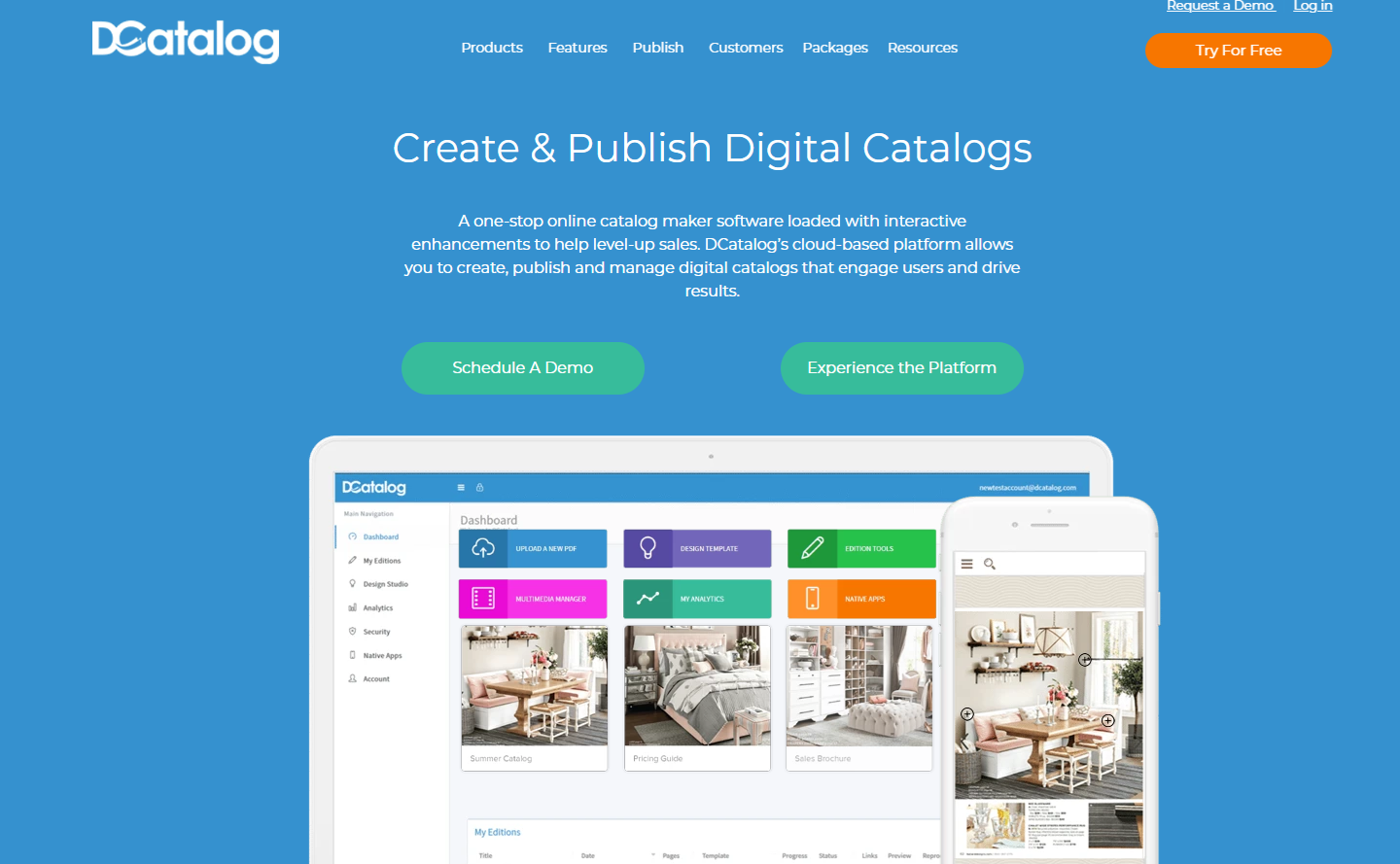
DCatalog specializes in transforming product catalogs, price lists, and technical manuals into interactive digital experiences. The platform offers two distinct creation paths: uploading existing PDFs for conversion into HTML5 flipbooks, or using the CSV-powered PDF Generator to automatically create branded catalogs from product data in seconds. This dual approach makes DCatalog particularly valuable for manufacturers, wholesalers, and B2B distributors who manage large inventories and frequently update pricing. The platform’s standout feature is its Virtual Library Rack, which enables cross-searchable catalog collections that can reduce document search time by up to 99%.
Key Features:
- Automatic PDF generation from CSV files with customizable branded templates
- Automatic product linking that connects SKUs and product numbers throughout content
- E-commerce integration allowing direct add-to-cart functionality from catalogs
- Virtual Library Rack with cross-search capabilities across multiple documents
- Multi-layered security including password protection, login gates, and SSO integration
- API and PIM integrations for automated catalog updates and data synchronization
- White-glove linking service for external links, polygon hotspots, and product connections
Pricing:
DCatalog offers three tiers with custom pricing: Select for basic branding and analytics; Elite adding multimedia enhancements and 3 users; and Enterprise for unlimited users with dedicated account management. Pricing based on active links with unlimited uploads. Contact sales for quotes. 7-day free trial available.
14. Zinio
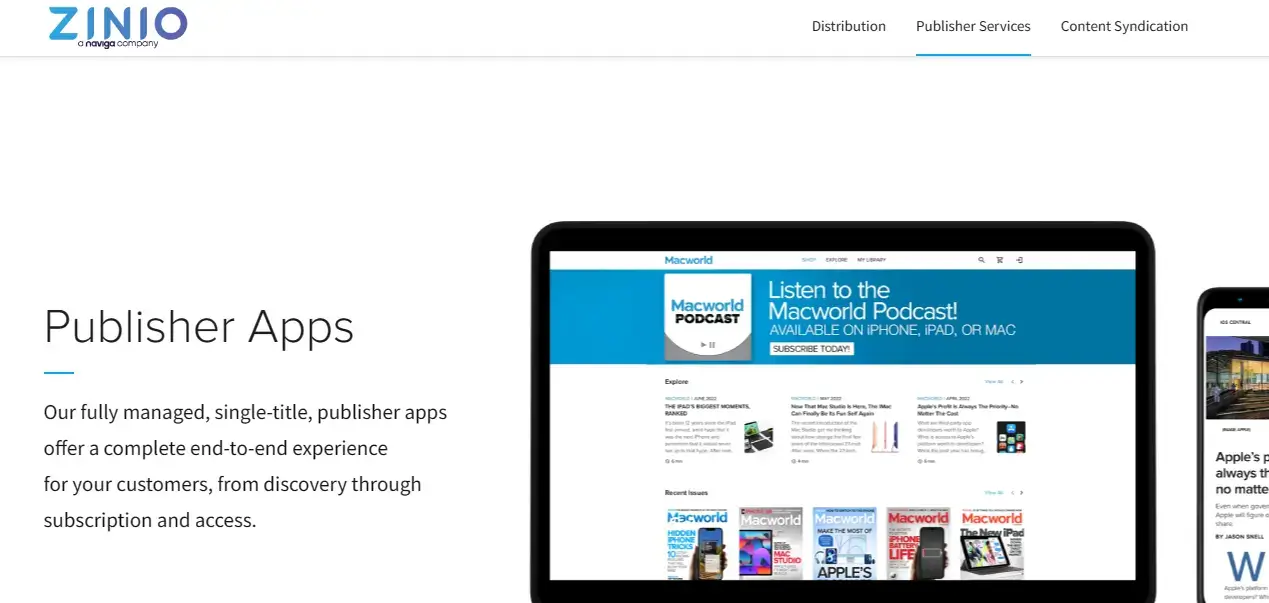
Operating since 2001, Zinio runs one of the world’s largest digital newsstand platforms with over 10,000 publications. While primarily known as a consumer magazine aggregator, Zinio also provides white-label publisher solutions for distributing digital editions, managing subscriptions, and reaching global audiences through their established distribution network.
Key Features:
- Massive distribution network reaching millions of readers worldwide
- Progressive web app and native apps for iOS, Android, and desktop
- Publisher solutions for digital edition creation and distribution
- Subscription management and single-issue sales capabilities
- Offline reading functionality across all platforms
- Integration with major magazine publishers and media brands
- Comprehensive analytics for tracking reader engagement and sales
Pricing:
Zinio does not publicly disclose pricing for publisher solutions. Contact their business solutions team for custom quotes based on your publication’s circulation, distribution needs, and feature requirements.
15. Kitaboo

Deployed across 25+ countries with over 6 million users, this platform specializes exclusively in educational publishing for K-12 textbooks, higher education materials, and corporate training content. Kitaboo’s enterprise-grade infrastructure handles 34 million daily API calls while maintaining 99.97% uptime, making it ideal for large-scale institutional deployments. The platform’s standout feature is K.AI, an AI learning assistant that automatically generates MCQs, flashcards, learning objectives, and chapter summaries from uploaded content. With 128-bit encryption and robust DRM protection, Kitaboo ensures secure content distribution—critical for publishers concerned about textbook piracy.
Key Features:
- K.AI assistant for automated quiz generation, flashcards, and learning summaries
- DRM-protected eBook creation and distribution with 128-bit encryption
- WCAG 2.2 compliant for full accessibility across disabilities
- LMS integrations including Clever, Schoology, Blackboard, and Canvas
- White-labeled iOS and Android apps with custom branding
- KITABOO Studio for self-serve content enrichment with multimedia elements
- SDK for deep embedding the reader into existing educational platforms
Pricing:
Kitaboo offers two tiers with custom pricing: Silver for 50-3,000 monthly users with monthly renewable terms and 10 support tickets; and Gold for large deployments with annual contracts, unlimited support, advanced analytics, and engineering extensions. Contact sales for detailed proposals. 4-8 week implementation timeline.
Design & Adjacent Tools
These platforms extend beyond traditional magazine publishing to encompass broader content management, design workflow, and enterprise-scale publishing needs.
16. Adobe Experience Manager
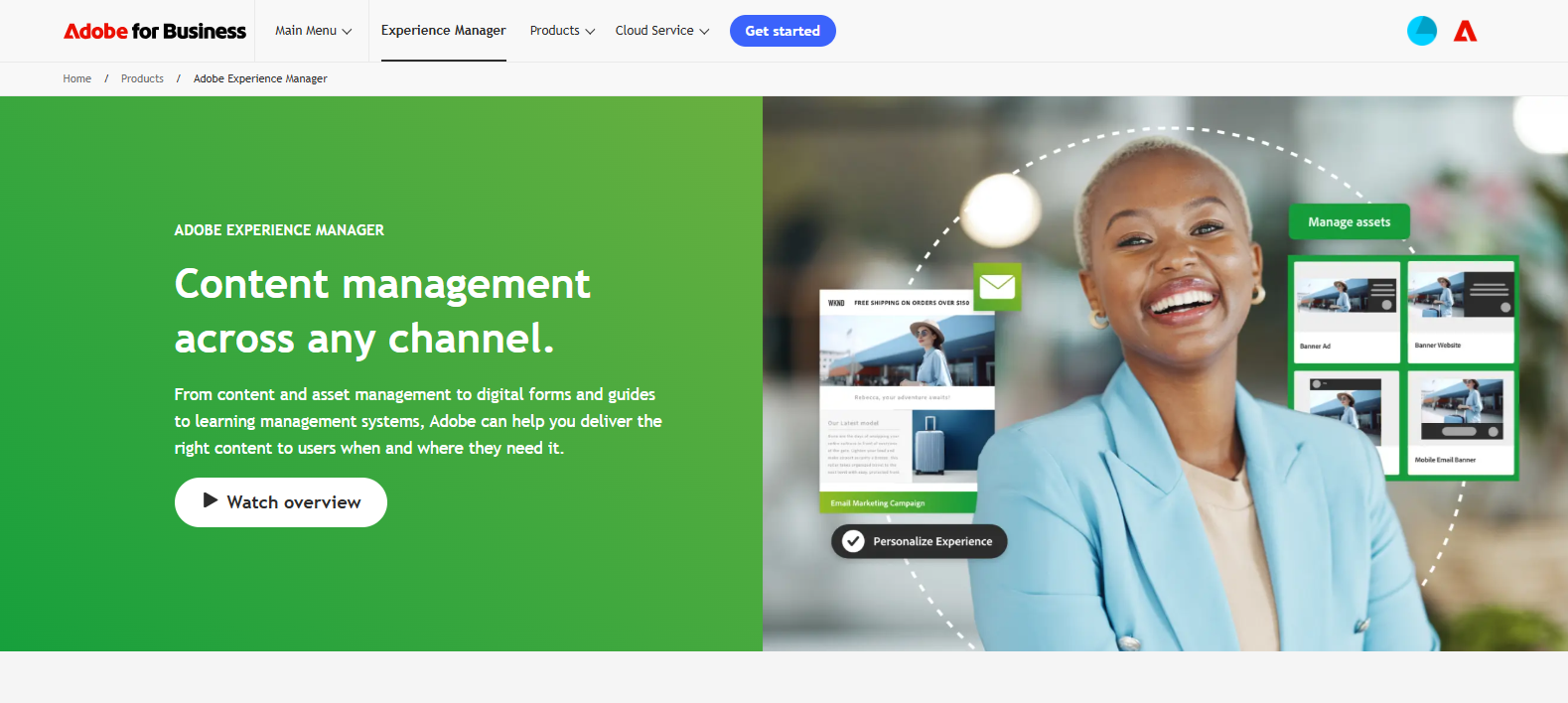
Adobe’s enterprise-grade content management system includes powerful digital publishing capabilities within its broader experience delivery platform. While not exclusively a magazine platform, Experience Manager Sites enables publishers to create, manage, and optimize digital content across all channels with sophisticated personalization and automation. The platform has gained significant traction among large media organizations seeking unified content operations across web, mobile, apps, and digital publications. Adobe’s recent introduction of AI-powered agents for content optimization, governance, and development acceleration positions Experience Manager as a future-forward choice for publishers with complex, multi-channel content strategies.
Key Features:
- Intuitive WYSIWYG interface with editable templates and drag-and-drop editing
- Headless CMS with GraphQL API for flexible content delivery across channels
- Multi-site manager for efficiently managing multiple publications or editions
- Translation workflows supporting global content distribution in multiple languages
- Adobe Creative Cloud integration connecting design and publishing workflows seamlessly
- AI-powered content optimization and governance agents for automated brand compliance
- Enterprise-grade infrastructure with 24/7 monitoring, auto-scaling, and 99.9% SLA
Pricing:
Adobe Experience Manager requires custom enterprise contracts with pricing tailored to organization size, content volume, and feature requirements. Contact Adobe sales for detailed proposals. Pricing typically includes core CMS capabilities with optional add-ons for forms, learning management, and enhanced security features.
17. QuarkXPress
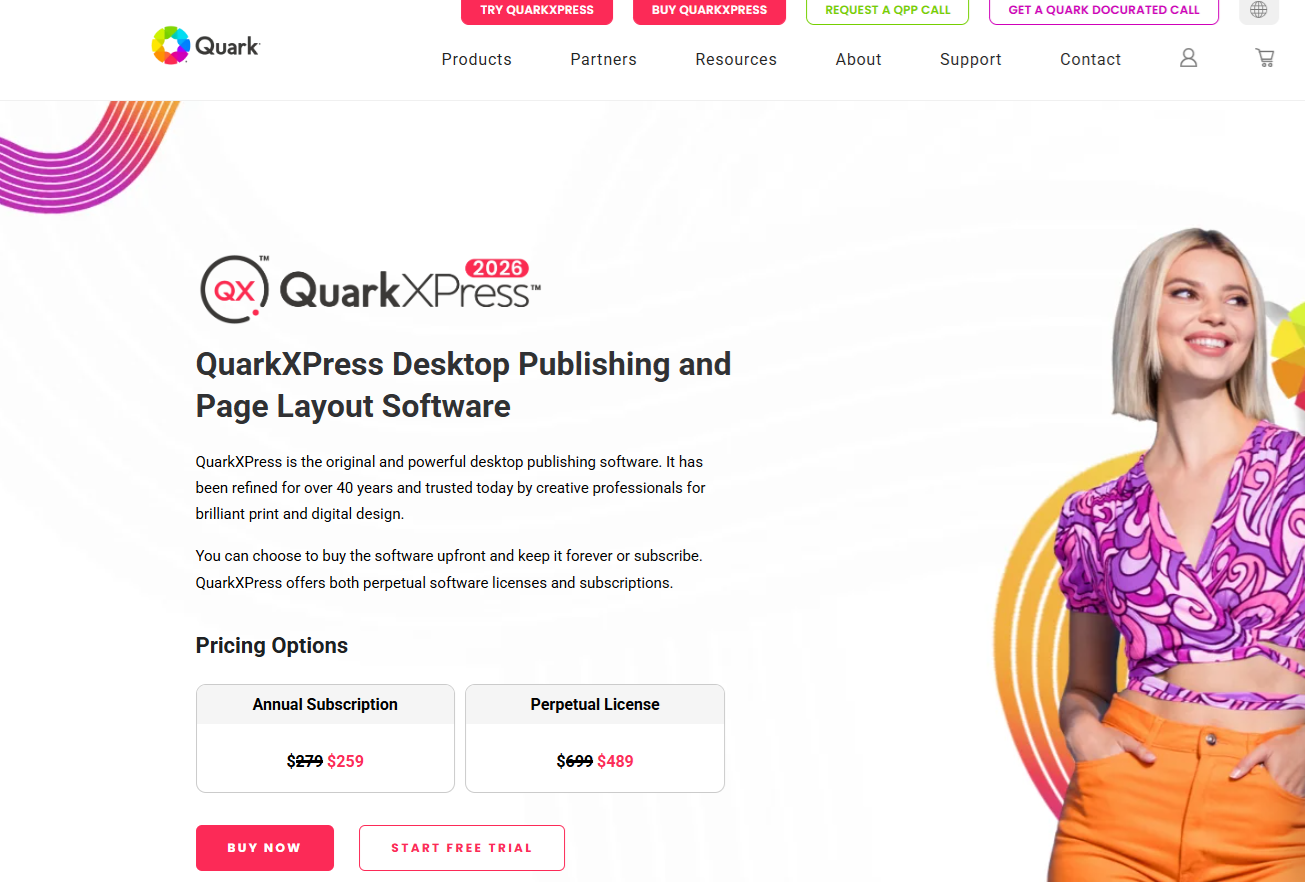
First released in 1987, QuarkXPress remains a trusted choice for professional magazine design with over 40 years of industry presence. This desktop publishing software focuses on precision page layout for print magazines while also offering digital publishing capabilities including ePub, HTML5, and PDF export for online distribution.
Key Features:
- Professional page layout tools for creating visually complex magazine designs
- Advanced typography controls with text wraps, outlines, and drop shadow effects
- Stock image integration from Unsplash and Pexels directly within the application
- Interactive elements including hyperlinks, videos, audio clips, and slideshows for digital editions
- Adaptive layouts that automatically adjust content for desktop, tablet, and mobile viewing
- Photo editing capabilities for correcting and enhancing images up to deadline
- Multiple digital output formats including ePub, HTML5, and responsive web layouts
Pricing:
QuarkXPress offers two licensing models: prepaid annual subscription at $259/year with automatic renewals including upgrades and support; or perpetual license at $489 one-time purchase plus optional $339/year maintenance plan. Academic, nonprofit, and government discounts available.
18. Canva
Originally built as an accessible alternative to professional design software, Canva has evolved into a comprehensive visual content platform that includes magazine layout capabilities. While it lacks the advanced prepress features that large publishers require, Canva’s intuitive drag-and-drop interface and extensive template library make it ideal for small publishers, content creators, and internal communications teams who need to design magazines without hiring professional designers. The platform’s collaborative features allow teams to work together on layouts, maintain brand consistency through Brand Kits, and publish directly to social channels alongside magazine creation.
Key Features:
- Thousands of professionally designed magazine templates for quick customization
- Drag-and-drop editor requiring zero design experience or technical skills
- Brand Kit for maintaining consistent fonts, colors, logos, and design elements
- Team collaboration with shared workspaces and real-time co-editing
- Extensive element library with millions of stock photos, icons, and graphics
- Social media content planner for cross-channel magazine promotion
- Custom sizing options for both print and digital magazine formats
Pricing:
Canva offers a free plan with basic features; Canva Pro at $14.99/month (or $119.99/year) for individuals with premium templates and Brand Kit; and Canva for Teams starting around $100-150/year per user when billed annually for collaborative workspaces and advanced brand controls.
19. StoryChief

StoryChief streamlines content creation and multi-channel distribution for publishers managing both editorial content and social media simultaneously. Rather than creating magazines from scratch, the platform optimizes the workflow for teams producing regular articles, blog posts, and social content that can be distributed across 100+ integrated platforms with a single click. The built-in editorial approval flow, SEO optimization tools, and collaborative workspace make StoryChief particularly valuable for digital-first publishers who need to coordinate content production across writers, editors, and marketing teams while maintaining consistent publishing schedules across websites, social media, and email newsletters.
Key Features:
- One-click publishing to 100+ platforms including WordPress, HubSpot, Webflow, and major social channels
- Built-in SEO and content editor with AI-powered optimization suggestions
- Editorial calendar with approval workflows and team collaboration tools
- AI marketing agent with 5,000-8,000 monthly credits for content generation and optimization
- Multi-channel analytics dashboard tracking performance across all distribution channels
- Content audit feature identifying optimization opportunities and high-potential topics
- Automatic layout adaptation matching each destination platform’s formatting requirements
Pricing:
StoryChief offers tiered pricing billed annually with 20% savings: Team Social at $34/month per seat for social media management; Team Editorial at $81/month per seat adding SEO publishing and 100 articles monthly; and Team Discounts with custom pricing for volume users. 7-day free trial available.
20. Affinity Publisher
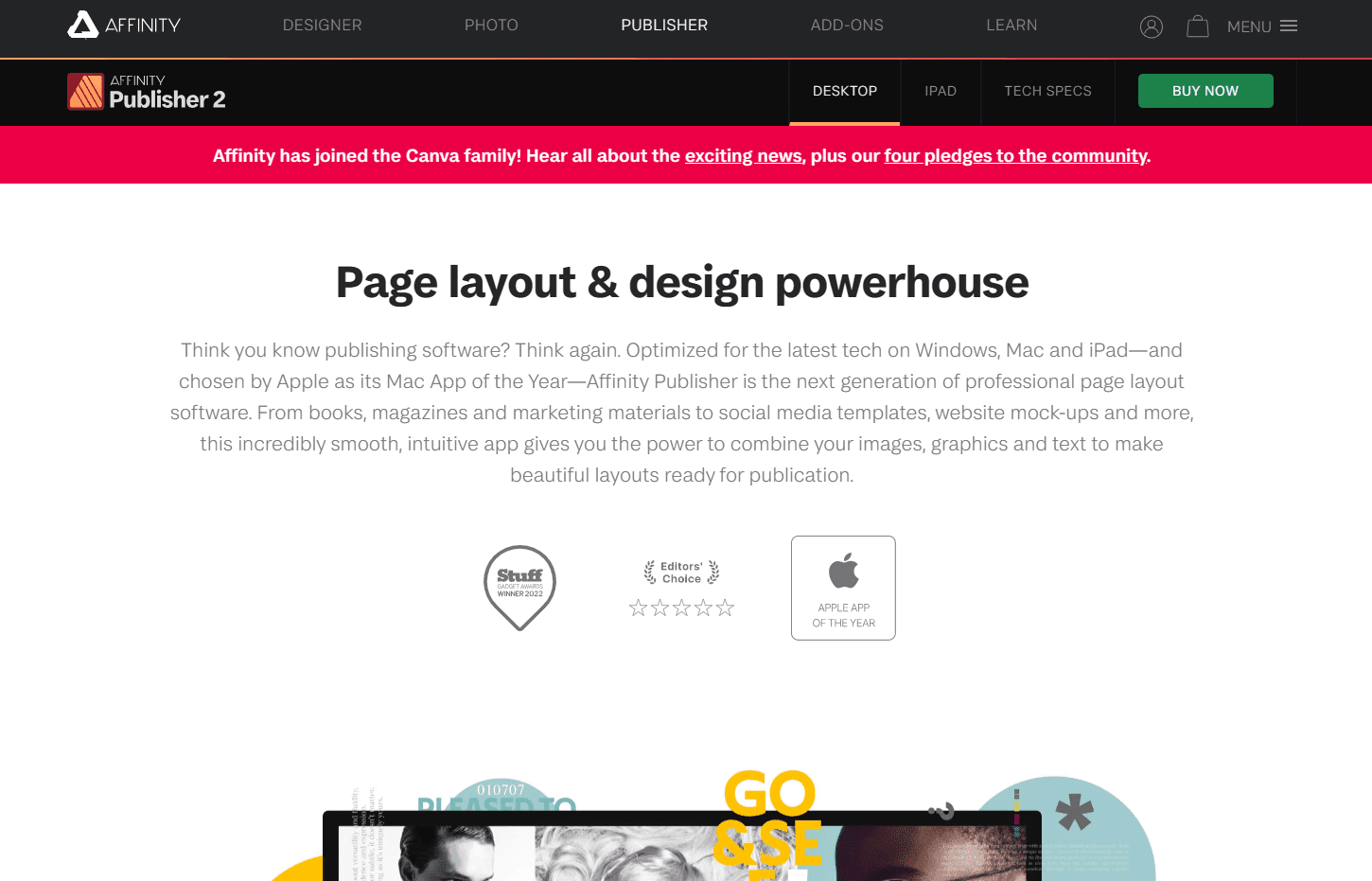
Acquired by Canva in 2024 and made completely free, Affinity Publisher delivers professional-grade page layout capabilities rivaling Adobe InDesign without any subscription costs. The software combines advanced typography controls, master page systems, and print-ready output with intuitive pixel and vector editing tools built directly into the layout workspace. This integration eliminates the constant app-switching that plagues traditional publishing workflows. Affinity’s data merge feature allows publishers to automatically generate multiple magazine versions from CSV files, while Smart Master Pages ensure design consistency across issues. For Canva premium users, AI-powered tools including Generative Fill and Super Resolution enhance the workflow further.
Key Features:
- Professional typography with advanced kerning, leading, OpenType features, and variable font support
- Smart Master Pages with reusable layouts maintaining consistency across publications
- Built-in pixel and vector editing eliminating need for separate image editing software
- Data merge functionality for automated generation of personalized content from CSV files
- Print-ready output with CMYK, spot colors, preflight checks, and bleed support
- Linked text frames with autoflow for efficiently managing large text volumes
- Canva AI Studio integration (for premium users) with background removal and image enhancement
Pricing:
Affinity Publisher is completely free for all users following Canva’s 2024 acquisition. Download requires a free Canva account. Canva premium subscribers (Pro, Business, Enterprise, Education) unlock additional AI-powered features including Generative Fill, image expansion, and Super Resolution directly within Affinity’s workflow.
Frequently asked questions
Get answers to important questions.
What’s the difference between a digital magazine platform and a PDF viewer?
A digital magazine platform reflows your content into mobile-optimized, single-column layouts that work seamlessly across all devices. PDF viewers simply embed your print layout on screen, forcing readers to pinch, zoom, and struggle with tiny text. True platforms also provide distribution tools, analytics, monetization features, and secure delivery systems—transforming static files into dynamic digital experiences that readers actually want to consume.
Do I need to create a mobile app?
No. While some publishers choose native apps for brand presence in app stores, modern platforms like eMagazines deliver digital magazines through secure email links that open directly in web browsers. No downloads, no passwords, no friction—just click and read on any device.
How much does a digital magazine platform cost?
Pricing varies dramatically based on publisher size, circulation volume, and features required. Small publisher solutions start around $15-50/month, while enterprise platforms require custom quotes. Most platforms price based on factors like number of publications, monthly page views, user seats, and whether you need self-service software or fully managed production services.
Can I convert my print magazine PDF?
Yes, most platforms convert PDFs into digital magazines. The best solutions reflow your content into mobile-optimized layouts while preserving your fonts, colors, and brand identity. Learn more about PDF to digital magazine conversion.
What about SEO for digital magazines?
SEO capabilities vary by platform. HTML-based solutions like Yumpu and Readz offer superior search engine indexing compared to embedded PDFs. Look for platforms providing automatic metadata generation, semantic HTML output, and Google-friendly sitemaps. However, remember that paywalled magazine content won’t benefit from SEO since search engines can’t index subscriber-only material.
With eMagazines, you can create and distribute beautiful, readable digital magazines. Learn more.