
Looking for a better way to read digital content?
Let us introduce you to online magazines—web-content that can be easily read with any device, no need for downloading apps. And absolutely no pinching and zooming to read PDF files.
Online magazines are the most beautiful, elegant version of premium content.
Whether you’re a publisher or a reader, we’ve got you covered with key facts about online magazines, how they differ from mobile apps, and top examples to explore.
What is an online magazine?
An online magazine is a premium digital offer that can only be accessed through secure links sent to paying subscribers. Online magazines can be read in the web browser of any modern device, including computers, laptops, tablets, and mobile phones.
Unlike blog posts and standard online articles, online magazines offer these features:
- Cover page with clickable links
- Table of contents
- Distraction-free premium content
5 examples of online magazines
Take a look at these examples of top online magazines, all created with eMagazines.
1. Esquire
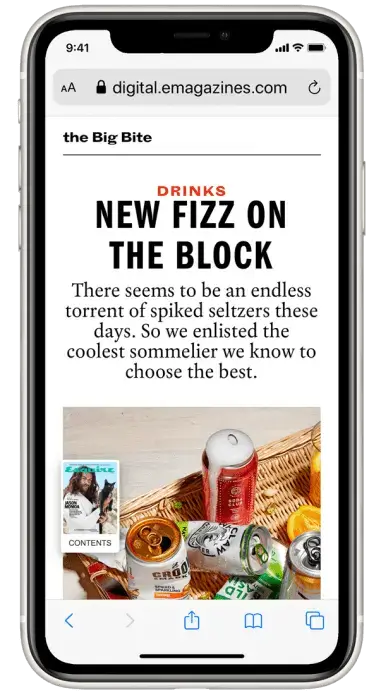
Esquire is a popular men’s lifestyle magazine. This example shows the power of clean whitespace, on-brand fonts, and bold imagery. You can also see a table of contents widget on the left-hand side. This allows readers to navigate through the articles easily.
2. Entertainment Weekly
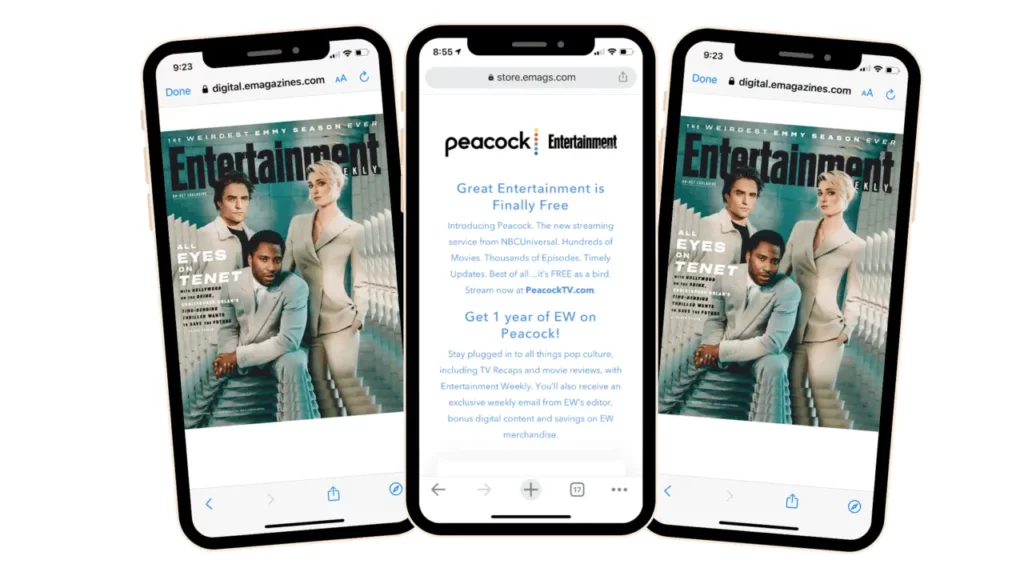
In this example from Entertainment Weekly, we can see what ads look like in online magazines. When formatted correctly, online magazines should be in a single column so they’re mobile-optimized and easy to read. Ads are typically up a full page, and readers can swipe to keep reading the main content.
3. Better Homes and Gardens
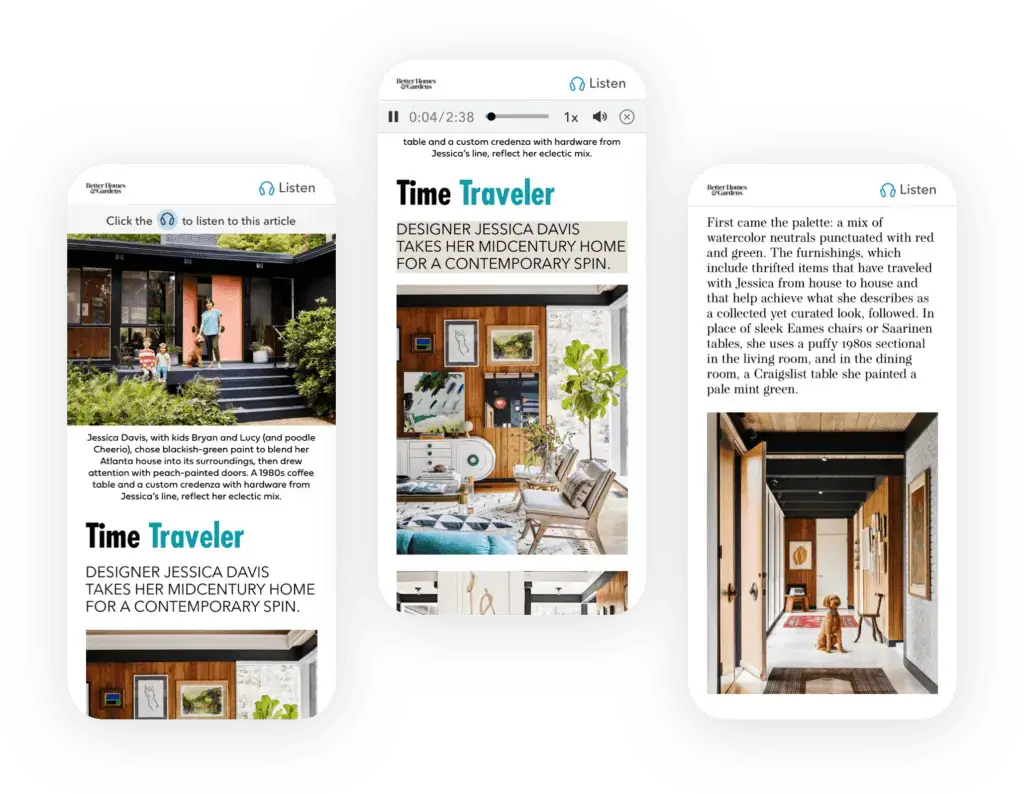
Check out this example article from the online magazine version of Better Homes and Gardens. Here, we can see an attractive, easy-to-read article featuring single-column content, branded fonts, and full-width photographs. This example also shows an audio version available to listen to at the top of the article. You can automatically create high-quality, AI-generated audio for your articles with eMagazines.
4. LOCAL Life
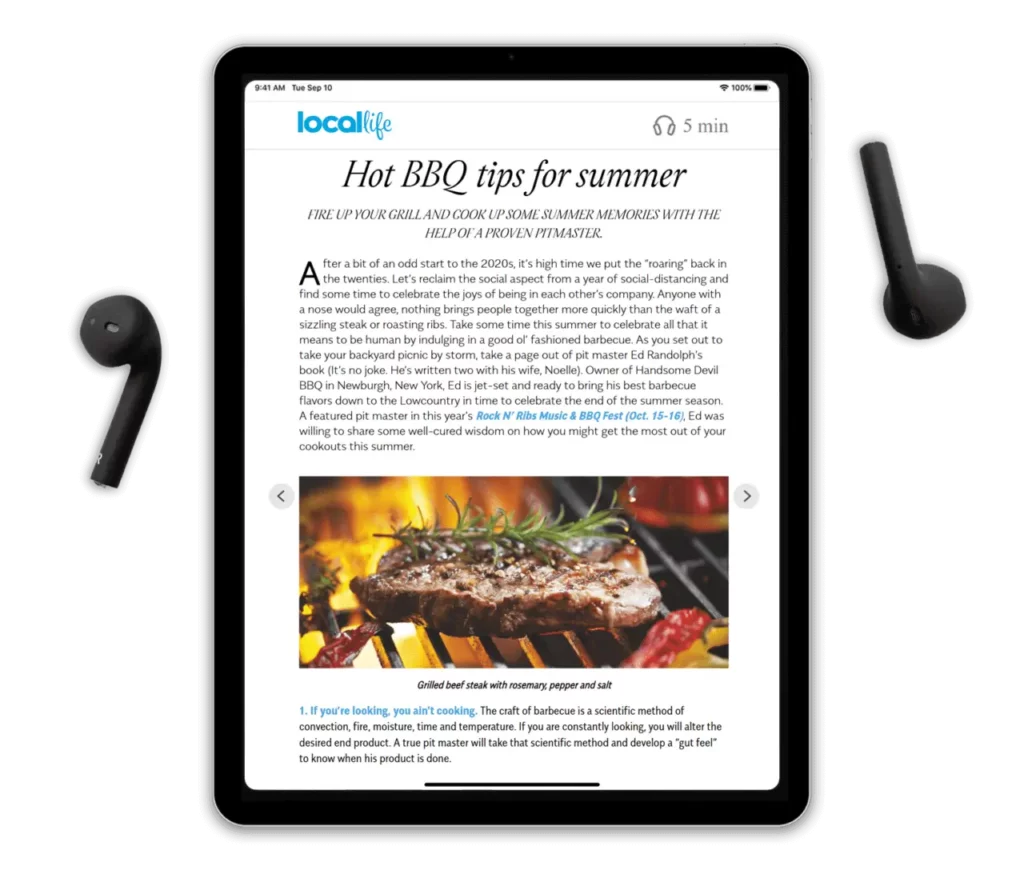
Curious what an online magazine looks like in a tablet? Check out this example from LOCAL Life, a lifestyle magazine serving Hilton Head Island, Bluffton, and Beaufort. Because content is laid out in a single column, it looks great no matter the size or orientation of the device.
5. People

And last but certainly not least, we have People Magazine, the premier source for celebrity news and features. In this example, we can see how effortlessly the publisher brands the online magazine version. Together, the logo, “exclusive” photo overlay, and fonts really create an on-brand experience.
7 facts about online magazines publishers need to know
Let’s dive into some real facts about online magazines to help you understand what makes this content format so great.
1. The top publishers in the world offer web-based online magazines
The vast majority of top publications deliver their digital editions via online magazines. The attractive content and relative ease for both readers and publishers make this a popular format.
2. You don’t have to create a mobile app
It is not necessary to develop a mobile app to deliver online magazines to your paying subscribers. Instead, they can click the link in the delivery email and open up the content on their web browser.
3. PDFs can be easily converted into mobile magazines
There’s even more good news for publishers. You don’t have to work too hard to create your digital edition. You can convert the PDF file of your print edition into an online magazine.
With eMagazines, our platform reads your PDF file and reflows it into an attractive, easy-to-read online magazine complete with on-brand colors and fonts. You can apply any global style changes you’d like to get the perfect look.
4. Mobile optimization is achieved with single-column content
Of course, online content needs to be truly mobile-optimized. The best way to do that is with single-column content. It stretches and expands to fit the device screen size, so you never have to worry about complex layouts and multiple columns. Online magazines offer this feature, and are so much easier to read than PDFs that have been embedded in a PDF viewer. No one likes to pinch and zoom.
5. Readers don’t need accounts or publishers
Readers don’t need to create login credentials or remember passwords. All they have to do is click the link in the delivery email notification for an issue.
6. Subscribers can access all licensed content in one place
Once subscribers click from an email notification through to the premium magazine content, they will also be able to access all of the issues they’re entitled to in one spot. (Again, with no need to remember passwords!)
7. Premium content is secure
It’s also important to know that your premium content is secure. Subscribers can’t share premium content with people who aren’t active, paying subscribers. Even if they share the delivery email, it won’t work for the wrong person, due to the security of the underlying technology.
To learn more about creating your own high-quality online magazine, get in touch with us.
How to choose the right online magazine platform
Not every online magazine platform delivers on the promise of a truly mobile-optimized reading experience. Some just embed your PDF in a slightly nicer viewer, which means readers are still pinching and zooming. Before you commit to a platform, it helps to know what actually separates a great one from a mediocre one.
Here’s what I’d look at first:
- True reflow, not just embedding. Does the platform rebuild your PDF into responsive, single-column content, or does it just wrap the file in a viewer? This is the single biggest factor in reading experience.
- Branding control. Can you keep your fonts, colors, and layout style consistent with your print edition, or will your magazine look generic once it’s converted?
- Audio support. Article audio is quickly becoming table stakes for accessibility and engagement. Check whether audio generation is built in or something you’ll have to bolt on separately.
- Analytics. You should be able to see session length, article-level engagement, and device breakdowns without exporting data to a third-party tool.
- Back issue access. If you want subscribers to browse your archive, confirm the platform supports it natively instead of treating each issue as a one-off.
- Pricing transparency. Some platforms hide pricing behind a sales call. That’s not necessarily a red flag, but it’s worth knowing upfront if custom pricing means custom scope or just custom sales tactics.
In my experience working with publishers on this exact decision, the platforms that look the most similar on a features page often behave very differently once real content gets uploaded. The best way to tell them apart is to test with one of your own back issues, not a demo file the vendor hand-picked to look good.
Online magazines versus native mobile apps
Online magazines are very different from mobile magazine apps created for iOS and Android. With an online magazine, readers can click on a link in an email notifying them of a new edition and open up the magazine in their web browser. No matter what type of device they’re using, there’s no need to download a mobile app.
This makes life easier for readers and for publishers, who no longer have to pay for custom app development and maintenance.
However, mobile apps do have their advantages. Many large media brands want to have a presence in app stores, and that’s reason enough to launch their own apps. Plus, mobile apps allow for the development of other features like saving articles, commenting on articles, engaging with other users, purchasing physical products, playing games, etc.
The short and skinny of it is unless you have a good reason to develop native mobile apps, opt for online magazines instead.
Common mistakes publishers make with online magazines
After helping publishers convert hundreds of print editions into online magazines, we’ve noticed the same handful of mistakes show up again and again. Here’s what to watch for.
Treating the PDF as a finished product, not a starting point
The biggest mistake is uploading a print PDF and assuming the job is done. A print layout wasn’t designed for a phone screen, so it needs a real review pass, not just a file conversion, to actually read well online.
Skipping the styling review
Automated conversion tools do a lot of the heavy lifting, but they don’t catch everything. Skipping the review step means inconsistent fonts, awkward image crops, or spacing issues can slip through and make the final product feel unpolished.
Requiring passwords or app downloads
Some publishers assume more security steps mean more protection for their content. In practice, login walls and app downloads mostly just create friction, and support tickets, without meaningfully improving security. Secure delivery links can do the same job with far less effort from the reader.
Ignoring the table of contents
It’s tempting to think of the table of contents as a formality since it’s auto-generated. But it’s often the first thing a reader interacts with, so headlines, bylines, and descriptions deserve the same care as the articles themselves.
Launching without testing across devices
A magazine that looks great on a laptop can break down on a phone or tablet if it isn’t previewed first. Testing on all three before publishing catches problems while they’re still easy to fix.
Ready to create your own online magazine and publish the best possible digital edition of your premium content? Learn more about our software and services and get in touch with us.