Publisher Question:
Does my magazine need native apps for iOS and Android?
Short Answer:
If you have an app and it’s profitable, keep it. If you don’t have one, you don’t need to build one. If you have one and it’s not profitable, it might be time to sunset it.
If you want the long answer, then keep on reading!
I’ve got all the important considerations, based on two decades of experience, that will help you make the final call.
In this article, I’d like to explore the pros and cons of publishers having an iOS and Google Play app. Just because eMagazines offer both services, it doesn’t mean we blindly tell each publisher they need apps in addition to our digital services. Each publisher, and their readers needs are very specific. We dig down and ask the tough questions, and then give our knowledgeable recommendation.
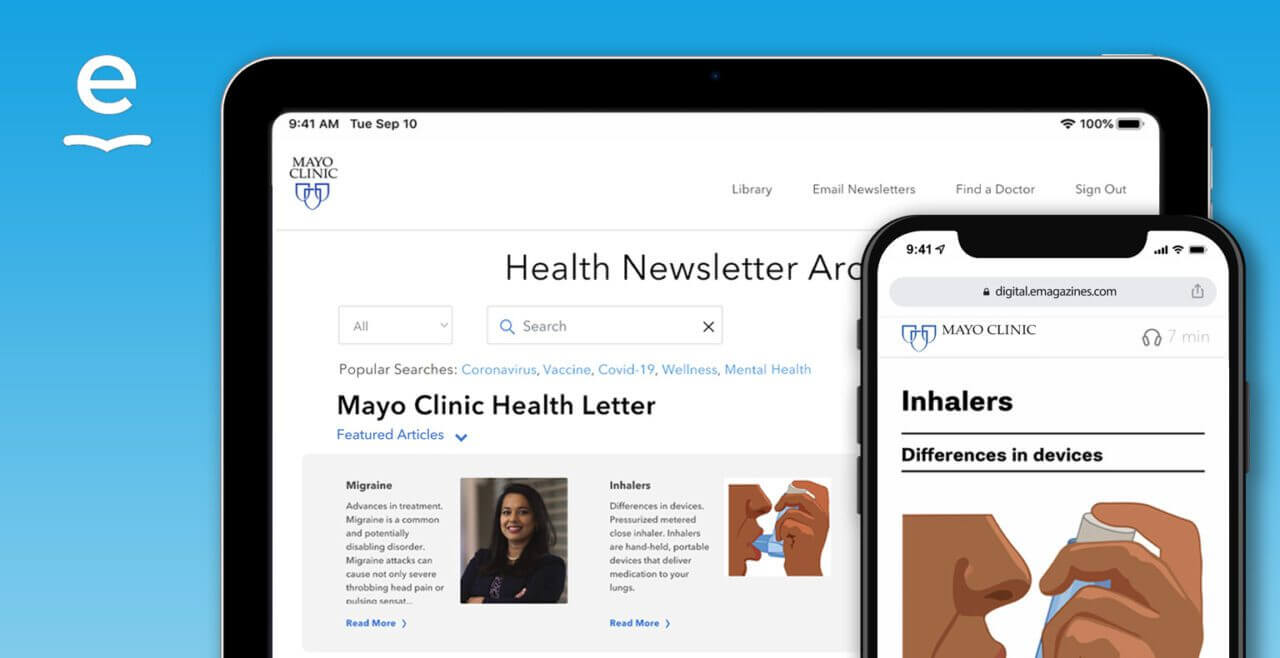
It should also be noted that our Digital Edition Platform is web-based. We send emails to notify your readers of new issues, and at subscription. These emails contain a link that takes a reader directly to their library, with no sign-in required. This premium service we provide gives your readers the most streamlined way of accessing their subscription digitally.
Also, we do create native apps for many publishers that contain all the modern elements and layout you would expect in iOS and Google Play apps.
Are you a new publisher or established? This shapes your app strategy
Let’s first differentiate between the two different kinds of publishers we see: new and existing.
For existing publishers, who have been around since the inception of the first iPad, there was this feeling (that seems to be fading) that every magazine needed to have an iOS and a Google Play app.
For new publishers, a magazine app seems a novelty. If you don’t have a proven brand yet, the cost of having these apps doesn’t seem to justify producing them, if you don’t have a built-in audience to flock to an app to cover it’s cost. I would recommend a using our Digital Edition Platform as a starting point as a best practice.
I can tell you first-hand, that you don’t need a Google Play app. Let’s just address that elephant in the room right away. We’ve seen the numbers for years, and the readership on that platform is dismal, to put it mildly.
The reality to having an iOS magazine app comes with many caveats. However, as I said at the beginning, I’ll say again now. If you have an iOS app, and it pays for itself, or better yet, is profitable, you may want to keep it running. Let’s take a deeper dive into the challenges you face when having an app.
Challenge 1: Readers expect all-access, and login makes that messy
First, I would say you have a contingency of readers that have been getting your magazine in the mail since time began. They don’t read it digitally. To solve that, just give them digital for free with print. They will receive the email each month, and when their physical magazine is at home, and they aren’t, they may just start reading it digitally. Why deny this group access?
Secondly, I would say that readers expect all-access. It’s frustrating to have to pay for print, digital, website access, and access to the native apps separately. Publishers should provide and “All-Access” subscription.
However, having that all-access subscription does create another pain-point for publishers: the login. In the worst cases, you have a separate login for the website, the native app, and the web based app. You’ve now created yourself a customer service issue.
We address this issue at eMagazines in several ways. Your customers can sign in and subscribe through your fulfillment house, or your own in-house solution on your website. This same login can also unlock the website access. The email generated from eMagazines requires no login (though it is a log-in link), and finally, we can let the user sign into the iOS app with their subscriber account number located on the cover.
Challenge 2: Apps create friction at every step
Our Digital Edition Platform keeps things simple. Readers click a link in their email and they’re reading instantly, no steps in between. You see this frictionless email notification approach with most major publishers for good reason.
Native apps introduce friction at every stage. A new subscriber has to find the app in the store, download it, figure out their login credentials, and successfully authenticate before they can read a single page. Each of those steps is an opportunity to lose them. Many readers simply give up and contact support instead, creating a customer service burden that compounds as your subscriber base grows.
The data bears this out: apps consistently generate more support tickets per reader than web-based delivery. And when a reader’s first experience with your digital edition is a frustrating one, you’ve undermined the very thing your subscription is supposed to deliver.
Challenge 3: Apple takes a cut—and your customer data
Apple takes a 15% cut of every subscription sold through the App Store. That’s revenue that never reaches you, on top of whatever it costs to build and maintain the app in the first place.
The deeper issue is data. When a reader subscribes through Apple, you don’t receive their email address or any meaningful contact information. You can’t reach them with renewal campaigns, upsell offers, or win-back emails if they churn. You don’t own that relationship—Apple does. For publishers whose long-term growth depends on building a direct, addressable audience, this is a high strategic cost that doesn’t show up anywhere on the App Store revenue report.
Playing Devil’s advocate for your most loyal readers
For all the challenges above, there’s one group worth pausing on. These are your most loyal readers, people who sought out your app independently, downloaded it, paid for a subscription without being prompted, and open it regularly. They didn’t need a frictionless onboarding email. They wanted the native app experience and went looking for it.
This group tends to have higher engagement and lower churn than subscribers acquired through other channels, precisely because the motivation to subscribe came entirely from them. If your app has enough of these readers to cover its development, maintenance, and Apple’s cut—and still turn a profit—that’s a real business case for keeping it running. The key is to actually run the numbers rather than assume. Loyalty is valuable, but it still has to pencil out.
What have we seen as an industry trend?
Let’s take a look at what’s really happening in the industry. This will help you make a practical decision.
- Publishers who only make iOS apps. This one has been going for a while. They just make an iOS app and don’t bother with Google Play.
- Publishers sending the email notification and not promoting the apps. There have been a lot of publishers who have native apps, and readers can actually access their content in them. However, they don’t promote it in any way. Should a reader find the app, download it, and figure out they have access, fine. But they don’t invite that headache by telling them about it at subscription. They have the app up to address the group of readers who actually love using apps, as mentioned above.
- Publishers who have (or have plans to) sunset their apps. Many publishers are now just picking up their toys and going home. We’ve seen this happening more and more recently. The amount of readers, and sales, just don’t add up. And by pulling the apps, they can contact the readers via a banner and actually collect their email and get them setup on their other digital services.
- Publishers are leaving print, and opting for digital only. A lot of publishers are seeing the cost of actually printing the magazine, is no longer worth it. This is making them reexamine their digital offering to make it more robust and easy to access.
- Publishers who are on Apple News + are actually making money. For those select few publishers that were invited to the Apple News + platform, they are seeing more revenue there than they ever made in their iOS app. Clearly this is the Apple platform that every publisher should strive for.
Making the final call
If you are an existing publisher that has an iOS or Google Play app, it is time to take inventory. How many people are using that app? What kind of revenue is it generating?
Publishers should also take a hard look at the customer journey. Is it an easy process for your readers to access your digital content?
And finally, how do I bundle access to all of my content without making it a pain-point for the customer to get access?
Here at eMagazines, we solve publisher concerns like this everyday. We love helping you take a look at the bigger picture, and our solutions are catered to all the challenges and collective knowledge we’ve gained over the years.
The vast majority of publishers don’t need an app, and are better off sending content via email with secure links. But, we’re here to help you make this decision either way!
Learn more about our native app development services for magazine publishers and reach out to us if you have any questions.